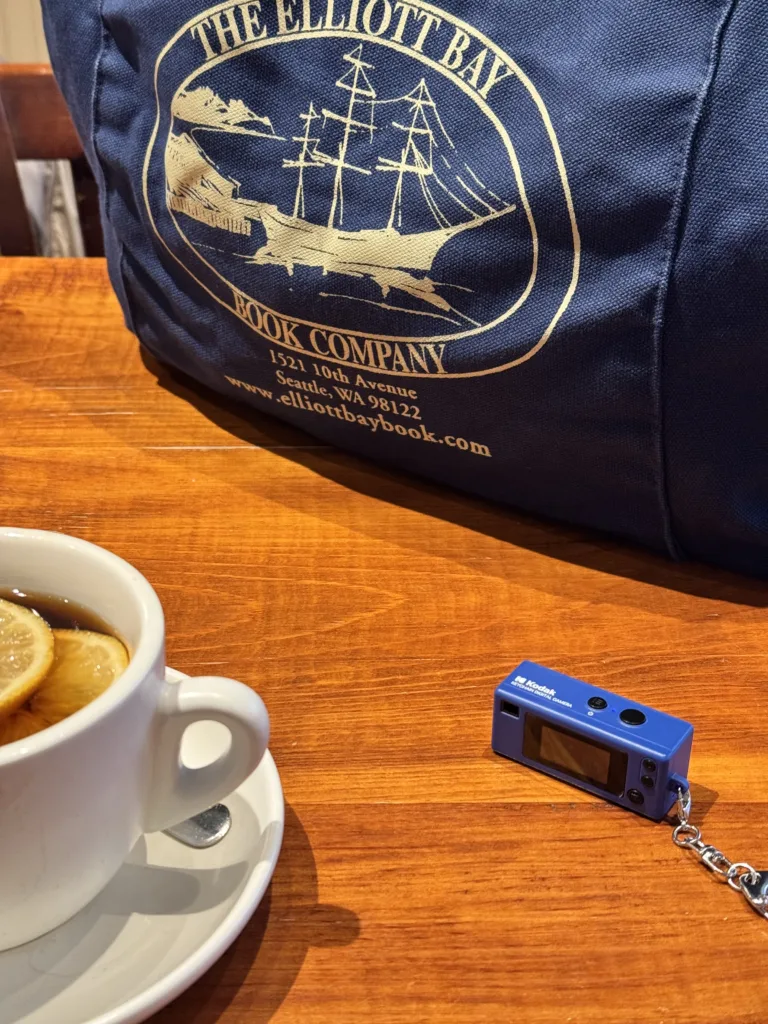
I’ve been trying to get back into casual photography over the past six months. Unfortunately, photography can be a pretty expensive hobby, so I am pretty grateful that I got a Charmera over the holidays to play around with!
What is a Charmera?
A Charmera is a popular keychain camera, which have grown in popularity over the past couple of years. This one is pretty expensive for a 1 megapixel sensor, but it comes in a blind box with six different designs, including one ultra rare design! It’s perfect for consumerists such as myself.
Unfortunately for me, I got this blue one that I don’t mind, but don’t love either. If anyone has a cool one (the yellow or red) and wants to trade, do let me know!
Now that I’ve been seriously using this camera for slightly over a month, here are three things I’ve learned about the camera, and photography in general:
Wow, this camera has no stabilization!
Everything is shaky, especially if you have stress tremors like me. Snap more than one photo because it’s a huge gamble on which photo will not be slightly blurry.
Don’t count on a good sunset
Surprisingly, low-light performance is slightly better than what you’d expect on this camera. What isn’t good however, is any photo taken during dusk. The camera is not good at picking up a large light range and will end up overexposing the entire photo as a result. Shadows still work, but focus on even lighting in your photos.
People are WAY better to shoot than non-animated subjects
For some reason, photos with people really pop out with this camera. I believe it’s because it softens out silhouettes and faces, which really helps with the crappy look of the cameras.
TrTried
Ultimately, I have really enjoyed using the Charmera, despite all of the issues I’ve faced with the formatting with the SD card. The camera works particularly well with street photography and those candid moments that come and ago, and I’ll continue using it for that purpose. Looking forward to exploring photography more and being mindful of the photos I take!
Around two months ago, I decided to embrace the silly life by creating silly goals for myself. Today, I am here to provide a update to this article, and reflect on whether or not these goals had an impact on how I live my life.
For May, I chose goals that were a bit easier to accomplish to ease me in (for example, talking to a stranger, which I do all the time). It was a great way to ease me into this experience as it did remind me to put more of my focus onto searching for these types of experiences. Unfortunately for me, it was also a bit too easy to accomplish these goals, as I finished all of my goals by early May, and the mindset flew out of the window after I no longer needed to look at a list of goals.
In June, emboldened by May’s progress, I created six goals in a variety of topic areas. These included things like: “Have a picnic with friends” and “Stay off social media for twelve hours”. I only accomplished two out of the six goals this month, mainly due to a very busy schedule that took these goals out of my mind. Overall, I will say that June was not very successful for this reason alone, as I didn’t encompass the silly mindset.
Lessons
Create goals that don’t depend on other people to accomplish: your goals cannot be contingent on the existence of other people helping you accomplish your goals. The goal of these goals are to embrace creativity
Make it easy, make it hard: your goals should challenge you, but also be approachable in steps. Don’t force yourself to climb up a floor without building the staircase first.
Keep the silly top of mind: It can be hard to embrace the silly energy without prioritizing it. Since it’s a mindset, keeping it in focus by incorporating it into your life is a must.
Overall, I am still continuing this experiment throughout the summer, and as always, I am inviting y’all to join into the adventure! My goal for July and August is to incorporate this reflection into my life, and get a bit sillier for once!
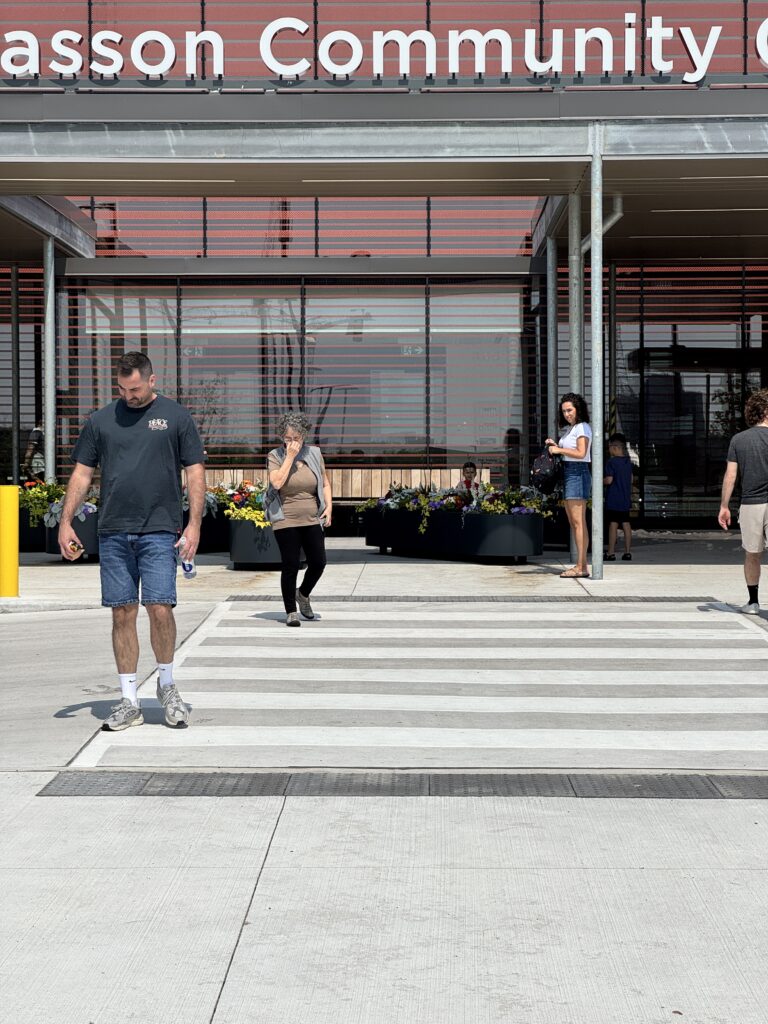
Carmen Corbasson Community Center in Mississauga, Ontario, Canada
TL;DR; I have a blog because I have too many thoughts and suck and writing them down into a cohesive piece.
Many (two) people have asked me why I even chose to create a blog on this website. Working on this website has been a goal for me since 2021, when I purchased this domain for e-mail addresses. I didn’t necessarily intend for it to be much, but as I approach my third month of writing in this blog, I think it’s a good time to reflect on why this blog exists.
Initially, I restarted this idea during a pretty low point of my personal life (still in my flop era tbh). I wanted to work on creating an outlet for me to explore ideas that I wasn’t able to express with my friends and colleagues (ie. talk about trains), and I thought a blog was the perfect outlet for that.
I also wanted to create a place where I could work on my writing, crafting my tone as I work on my Statement of Purpose for grad school. I do enjoy writing, but I did drop out of 12th grade English summer school, so I could probably use the extra practice to impress the admissions committee.
Originally, I planned on focusing on more insightful articles on mundane topics (such as my first post on a BART fare rule I found interesting), but I’ve slowly shifted my focus on incorporating more introspective in my blog. I’ve never really been an open book on a lot of topics in my life, and I’d like for this blog to incorporate more personal topics of my life. I’ve really been working on myself this year, so I want to grow with my writing as well!
Honestly, I’m not sure what effect these blogs are having on my life though. I’ve really written some heavier posts (pride month core), and some really random posts (why I love Oakville?), and I don’t really feel that my writing, or my mental health has been getting better to be honest. But progress is not linear, and I’m going to have to accept that because I don’t have a choice.
I think another criticism I have with myself is that my posts tend to be very long. Should probably work on that for the upcoming posts as I think it gets hard to follow the topic ideas. I’m still glad I’ve stuck with the blog for TWO whole months though, and I should be releasing one more blog post for June.
Overall, look forward for more mundane article topics! I’d like to take the time to explore the mundane topics of my life (like what’s my favorite road font). These articles take a bit of time to research, so I just really need to dedicate some time towards it this summer. I have until next year to decide if I want to keep up with this or move it somewhere else, so I’ll probably let y’all know when it comes to that.
A little fun fact about me: I’ve been to every single Japantown in the United States, according to this National Geographic article. Although I’d argue that there’s technically two more Japantowns, it’s a broader reflection on the redefinting of the ethnic clustering that predominantly self-segregated ethnic minorities into neighborhoods throughout American history.
Similar to Chinatowns, Japantowns were organically created by clusters of Japanese-Americans centering their businesses and livelihoods into a central location. This created a self-fulfilling prophecy of other Japanese-Americans coming together geographically, a phenomena that persists today in different forms. However, the traditional form of Japantown have almost disappeared from the fabric of American cities (driven by racism, World War 2 atrocities, white flight), with the exception of these three Japantowns.
Japantown | San Francisco
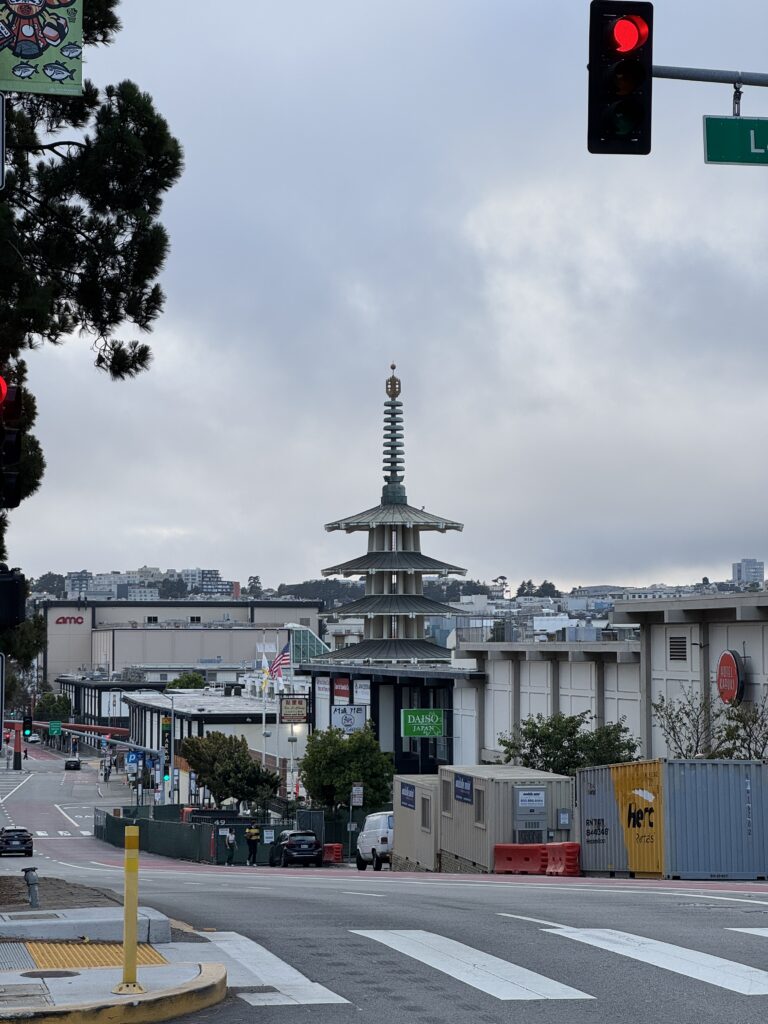
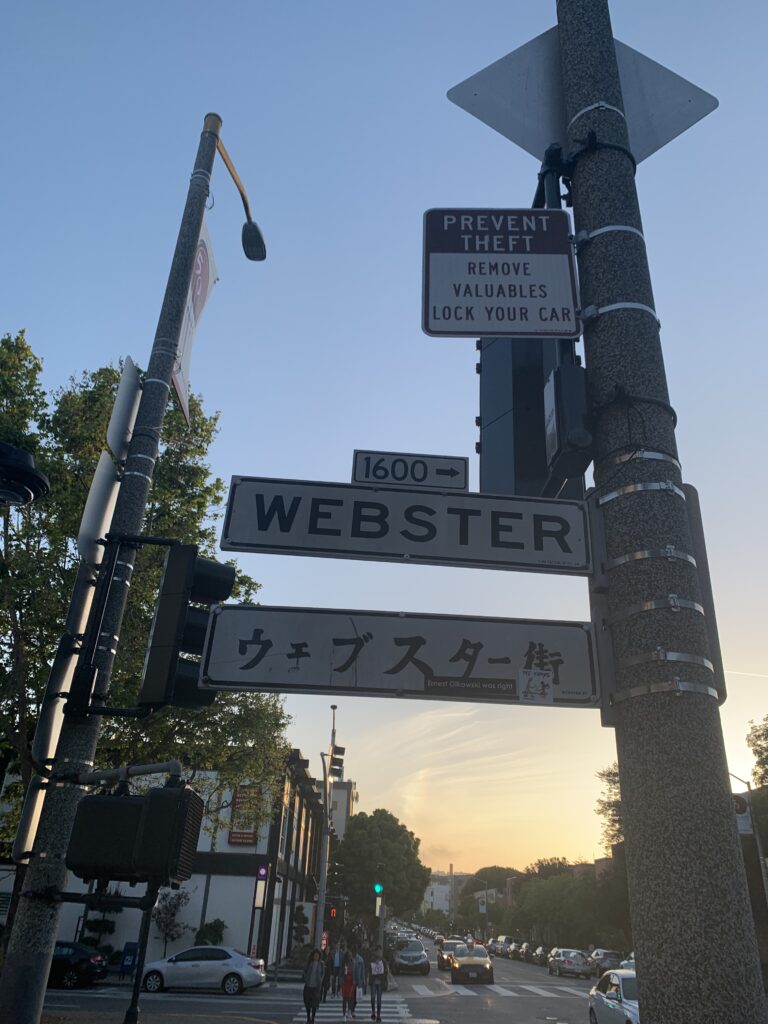
The Japantown that I’m most familiar with is the San Francisco Japantown – sandwiched between Pacific Heights and the Fillmore District along Geary lies a loud and proud center of Japanese culture. Centered around the Japan Center (a huge, 80’s style mall) and the Peace Plaza, Japantown remains a center of Japanese and East Asian culture in San Francisco, although overshadowed by the much larger, famous Chinatown by tourists.
Japantown I’d argue however, is a more American reception of a multicultural America with a Japanese twist. Japantown lacks a distinctive flair of “theme park neighborhood” that is omnipresent in Chinatown’s architecture, and replaces it with a close representation of a small Japanese city stuck in the 1980’s. Most of this is due to the extensive redevelopment of Japantown due to “urban renewal” projects initiated in the 1960’s and 70’s.
I go to Japantown often whenever I’m back in San Francisco because it’s a hub of entertainment, culture, and restaurants. In a city with no shortage of good restaurants, Japantown packs in a lot of great options in a six block neighborhood. Some highlights include:
Udon Mugizo
Marufuku Ramen
Daeho
Belly Good Crepes
Philmore Creamery (not technically in Japantown but it’s nearby and good!)
In addition, there’s a lot of great shops and places to get your Japanese goods fix, including Maido Stationery (a must stop for me!), a branch of Kinokuniya Books, a Niijya Supermarket, a AMC theater, a Japanese Cultural Center, Fog Cats & Yanchako (please support!) and obviously the famous Peace Plaza Pagoda!
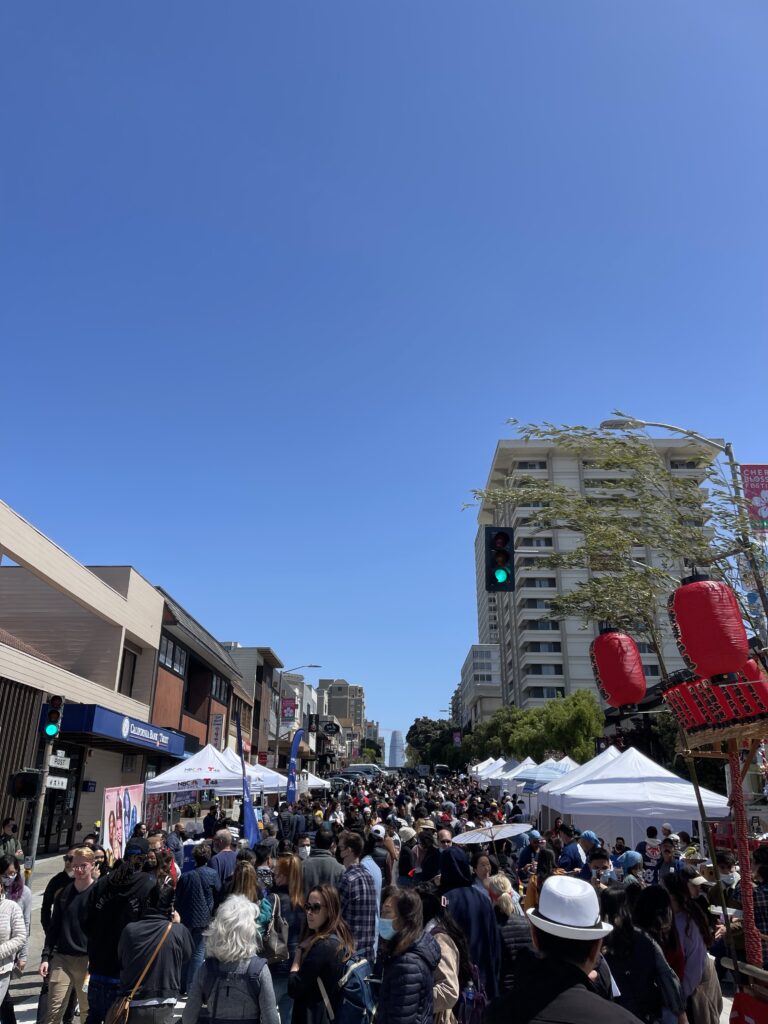
The annual San Francisco Japantown Cherry Blossom Festival is also a great event that I love, which takes place over two weekends in April (although I will say the one time I went the cherry blossoms already were way past their peak, probably could improve the timing). It’s a great event to see other local vendors and take in the resiliency of Japantown in an ever-changing San Francisco.
If you had to pick one Japantown to represent Japanese America, I would suggest this one. Although it no longer broadly reflects the Japanese diaspora, it’s a beautiful reflection of how the diaspora has grown and thrived.
Little Tokyo | Los Angeles
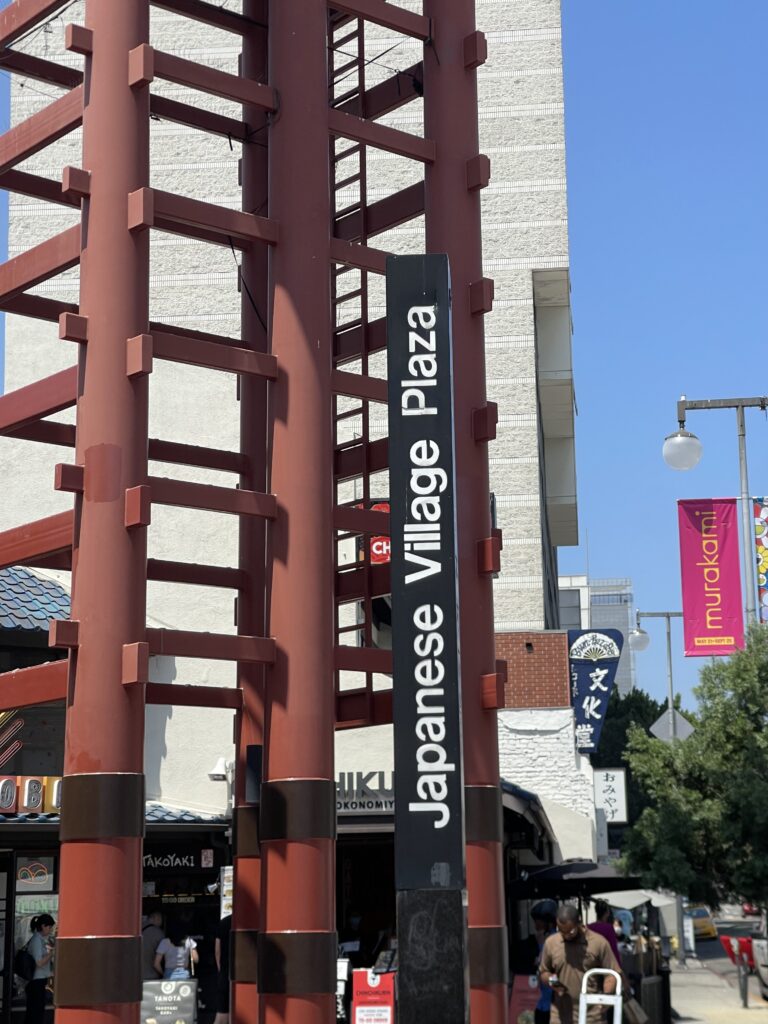
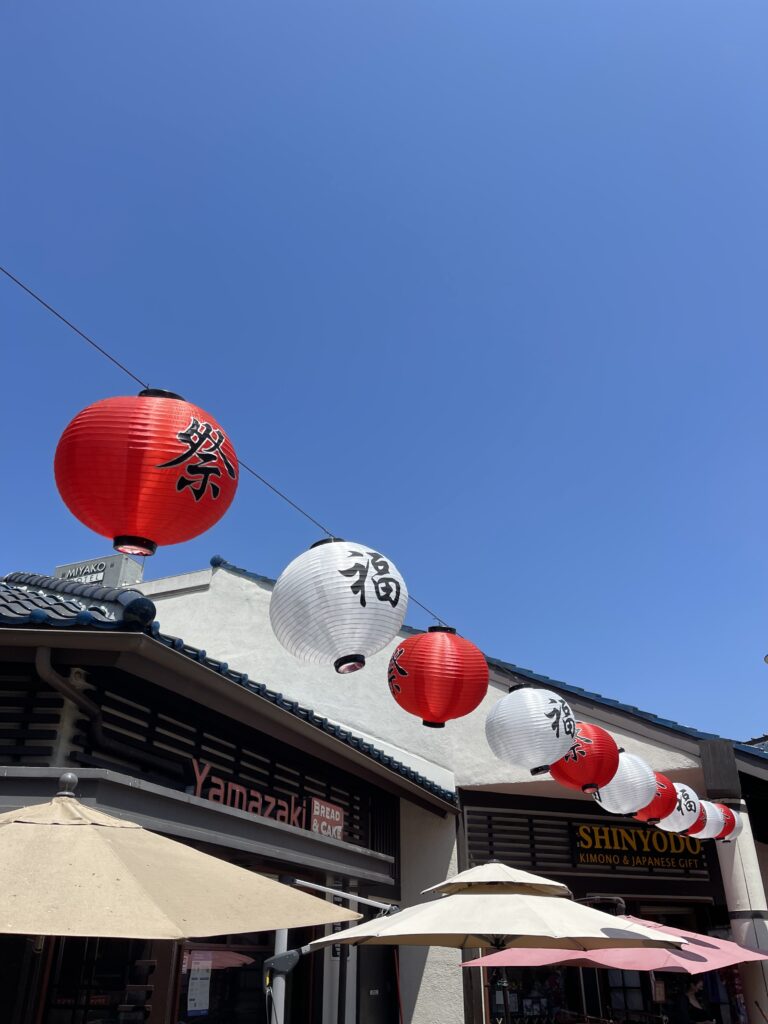
Little Tokyo, located in East Downtown Los Angeles and just south of Union Station, is one of two major Japanese hubs in Southern California (the other being Sawtelle). If San Francisco transports you to a post-war Japantown, Little Tokyo is more like the Disneyland of Japantowns. Usurped by the relocation of Japanese Americans into neighborhoods like Sawtelle, and the decline of Downtown Los Angeles led to the redevelopment of Little Tokyo into a themed shopping neighborhood, centered around the Japanese Village Plaza and the Japanese American History Museum.
Despite its location in Downtown, Japantown is a bustling space filled with restaurants and lively nightlife, which cannot be said for the rest of Downtown. It’s surprisingly safe for the area, which can be attributed towards the corporate nature of the neighborhood – the Business Improvement Area and the shopping center both contribute a lot of money into the security of the area, which gives it a huge outdoor mall energy. Unlike SF Japantown, the energy here is a bit less organic and more like Disneyland.
However, the neighborhood still retains a classic energy of Japanese spirit, with locals and tourists alike enjoying all the shops and eats in the area. The museum also contributes a lot to the neighborhood, by making it a de-facto center for Japanese American culture. Overall, while I like Little Tokyo, the spread of Japanese Americans throughout Southern California has diminished its role as a cultural hub. Japanese restaurants and stores are widespread, which makes Little Tokyo less appealing.
However, it still plays an important cultural role as a dominant ethnocentric hub in Southern California, and is a good reflection of the contributions of Japanese Americans into the fabric of the United States.
Japantown | San Jose
The last Japantown identified in the article is San Jose’s Japantown, which was originally founded by the surge of Japanese agricultural workers working in the Santa Clara Valley’s historic fruit fields (now replaced with blah suburban office parks home to tech companies and poor land use). After World War 2, many Japanese Americans who were removed from their homes settled in San Jose, leading to a thriving Japanese-American community in the valley.
Like every other Japantown in the list, the Japanese communities eventually dispersed all across California, and San Jose’s Japantown has quietly shrunk to a three block section of Jackson Street north of Downtown (4th to 7th streets). It’s charms and Japanese identity however, have remained as agricultural fields grew into Silicon Valley.
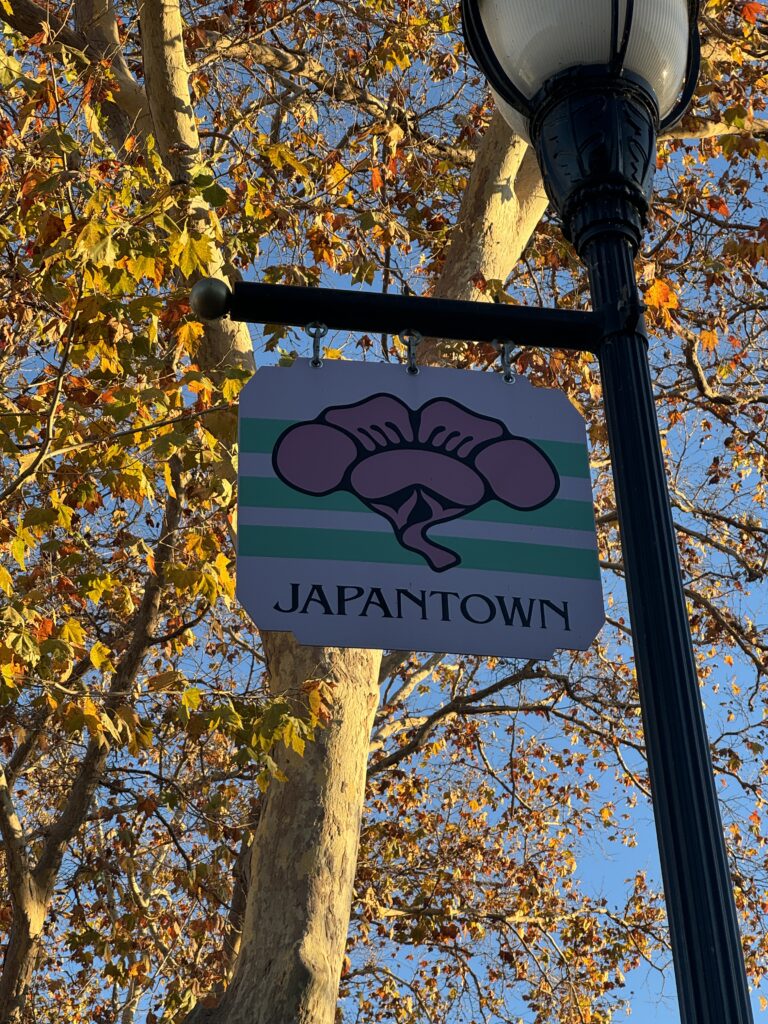
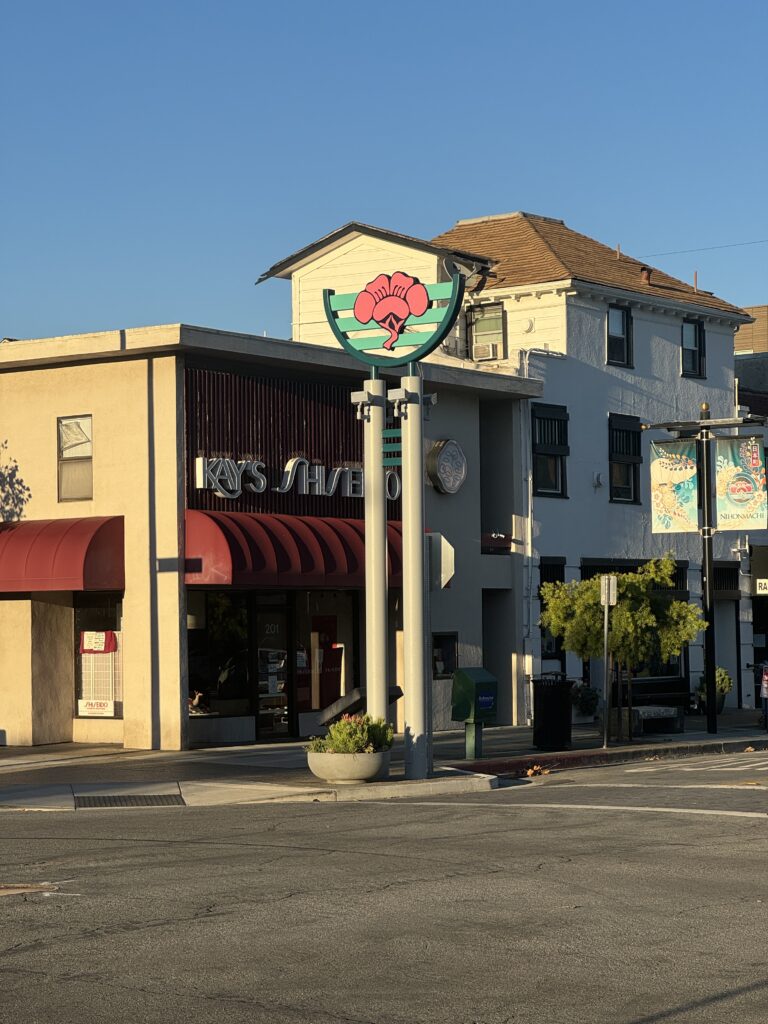
My visit to San Jose’s Japantown occurred on a Monday evening in November 2023. Although it was a warm day, most of the shops and restaurants were closed, as the community comes alive mostly on weekends. It was hard to ignore the neighborhood’s lack of life compared to San Francisco and LA’s Japantowns, although this is a common theme with San Jose. I loved the themed streetlights and logo of the neighborhood, but other than the historical markers and shuttered Japanese home stores, it was hard to picture this neighborhood as a Japanese community hub.
San Jose Japantown may have seen better days, but community leaders clearly care about keeping the identity of Japantown alive. While San Jose today may be more well known for some of the best Vietnamese food outside of Viet Nam, it’s legacy as a post-internment hub for Japanese Americans continues to cement it’s place in Japanese American society today.
Chinatown – International District | Seattle
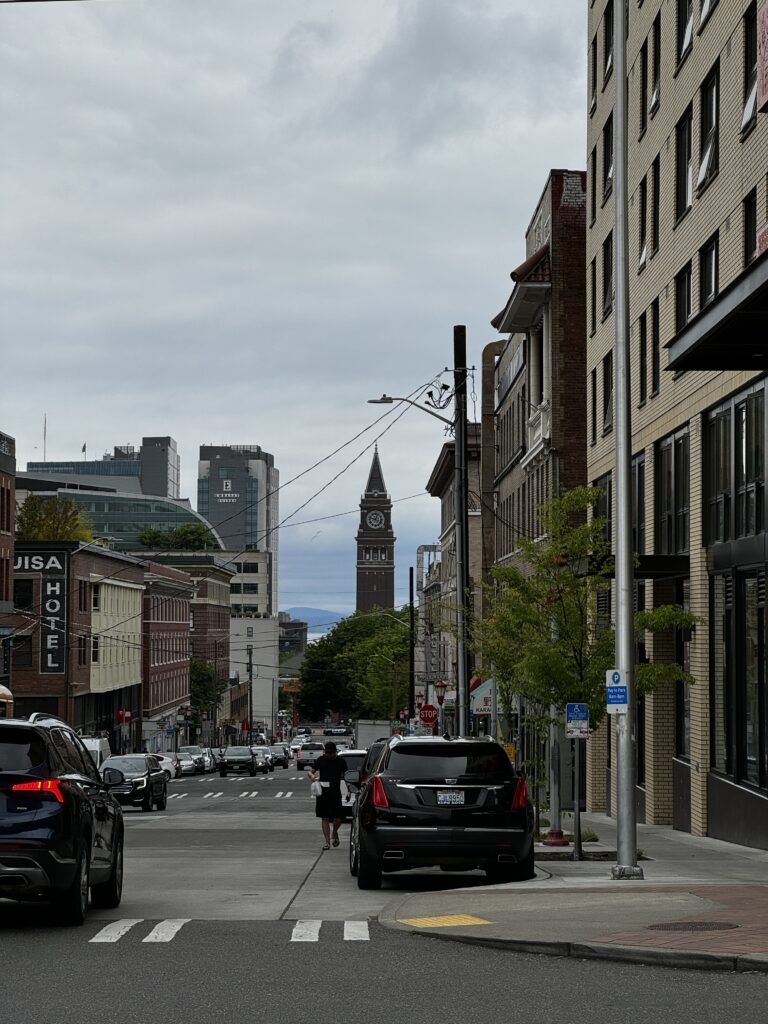
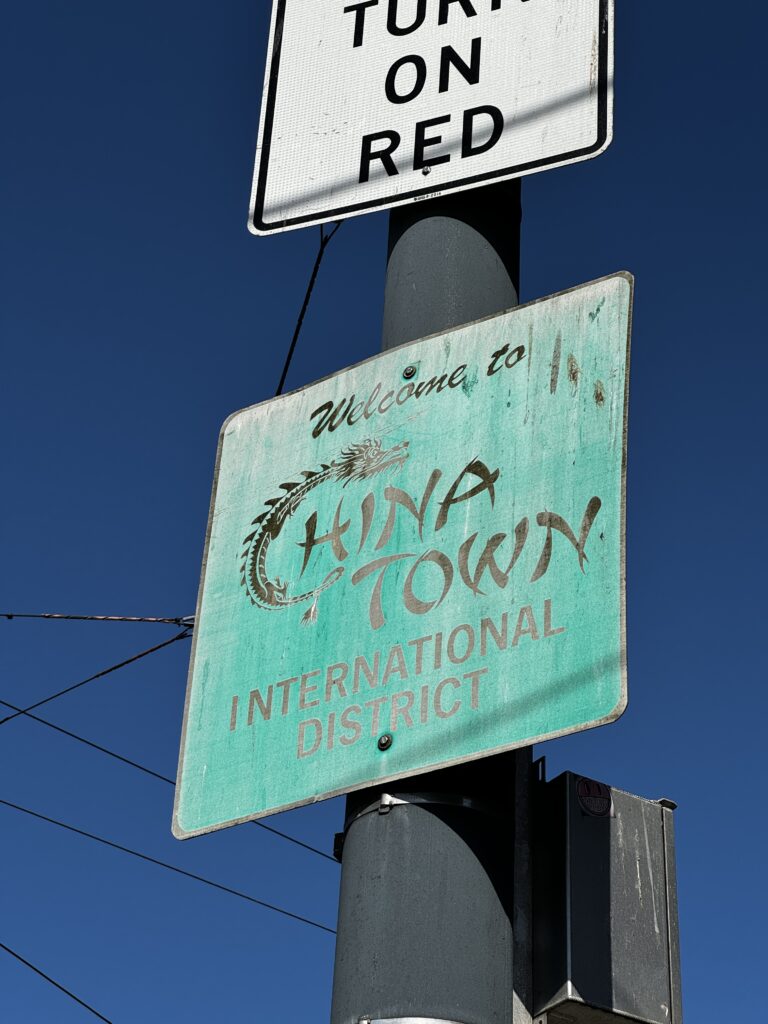
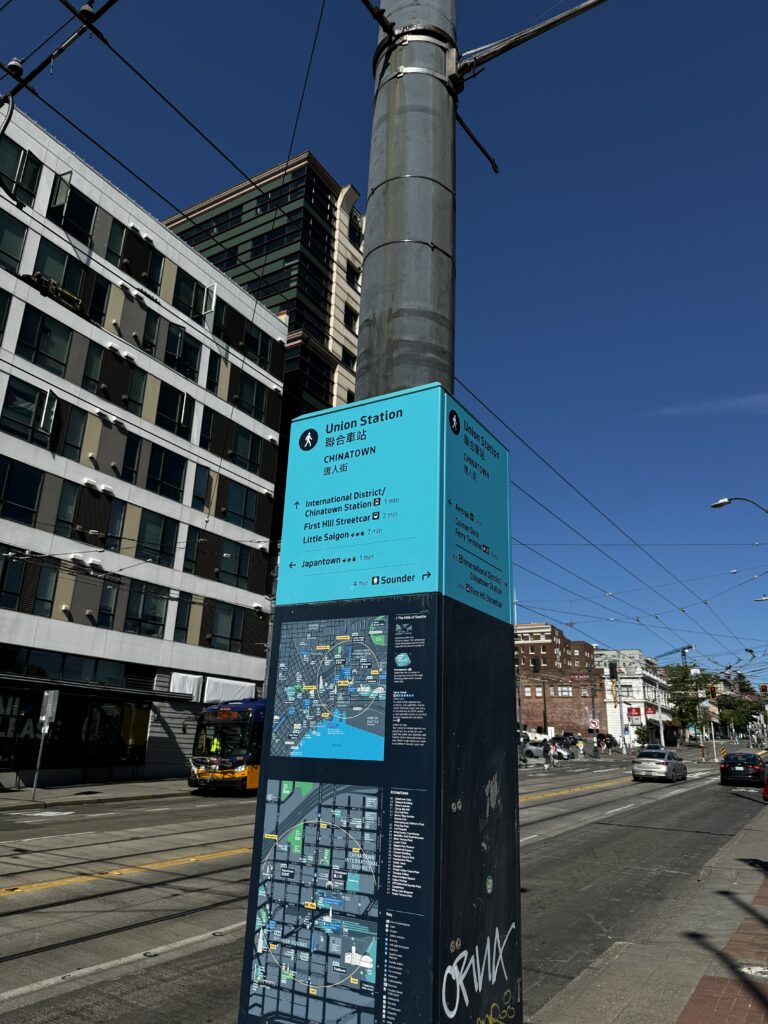
One more Japantown exists in my consciousness: Seattle’s Chinatown – International District (CID). Unlike the other Japantowns featured in this post, CID comprises of three different ethnic neighborhoods, with Vietnamese, Chinese, and Japanese communities forming the core of this multicultural neighborhood. The Japanese portion of the neighborhood is bordered by Yesler, South Jackson, Interstate 5, and 4th Street.
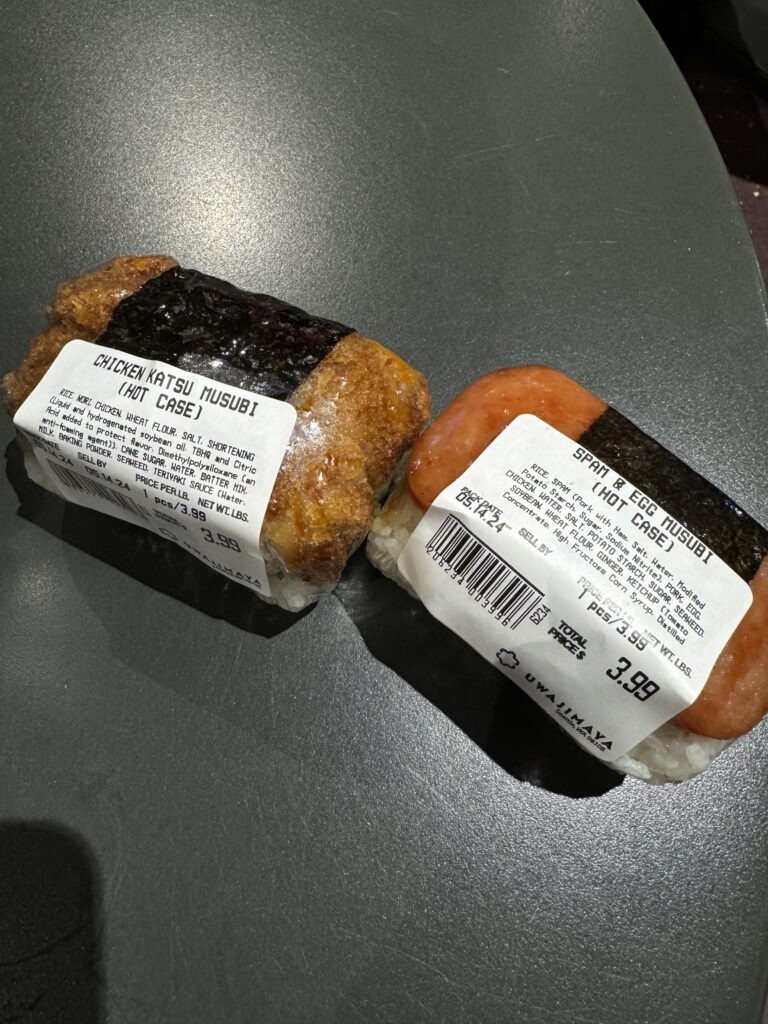
Although the modern day neighborhood is dominated by Chinese people, the presence of Japanese culture continues to persist today. The neighborhood’s major supermarket is a branch of the Japanese–American retailer, Uwajimaya. Japanese cuisine continues to thrive in the neighborhood, and a Japanese inspired park continues to permeate the Japanese–American role in this neighborhood.
One gem I loved from my short time in CID was Kobo, a Japanese store selling artisan goods. What makes it unique however, is that it exists as a modern reincarnation of Higo, a Japanese–American variety store that existed as a mainstay of the neighborhood for decades. What I loved about the store was the fact that it was a thread that linked the heyday of Seattle’s Japantown to the current day iteration of it. An exhibit exists inside where you can learn more about the store’s role, and how it continues to drive Japanese spirit in the area today.
Connecting thePast
In my research, I try to make a visit to each Chinatown. As a Chinese–American, it’s ultimately a cultural identity that I am naturally drawn to. If you know anything about Japan’s role during World War 2, you may aware about the relationship between Japan and China. However, in America, Chinese and Japanese alike were bonded in the cultural roots of discrimination, sacrifice, and growth in an increasingly multicultural America.
Ultimately, the story of Japantown is also rooted in the story of Chinatown – two marginalized communities that bonded to form the urban fabric of America today. As a conversation around the preservation of Chinatowns permeates around the Chinese American community, it would be of abject behavior to not examine Japantowns and their identity today as well.
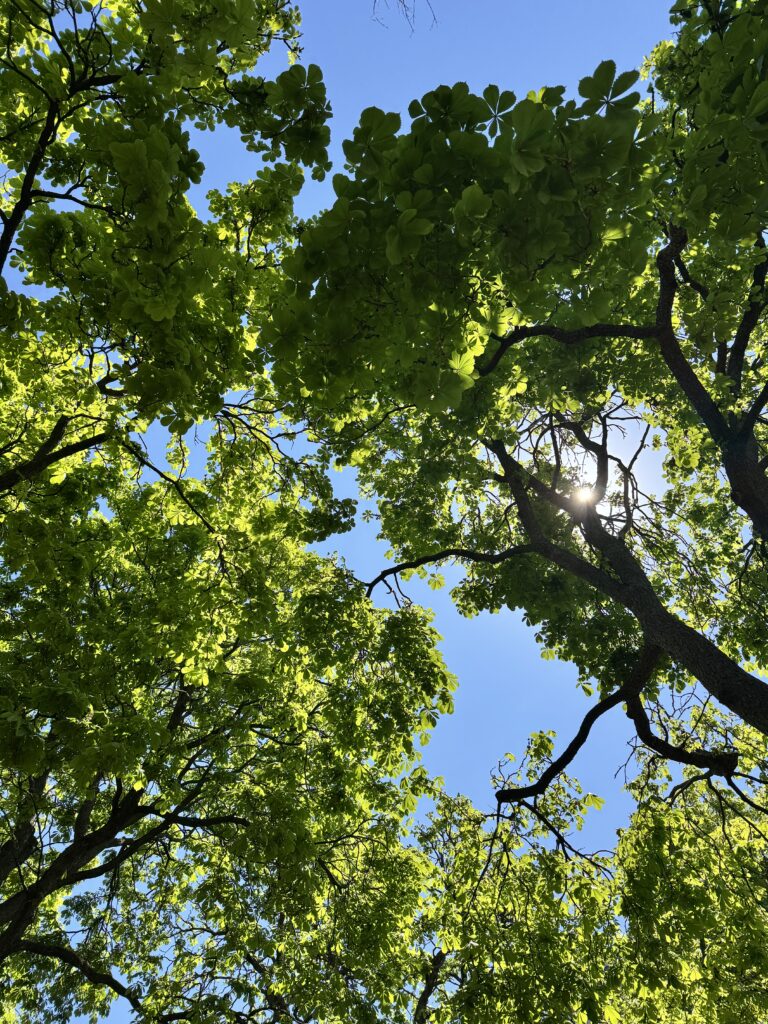
One thing that I am grateful for this May is a truly beautiful park day.
Every once in a while, I like to take some time out of my day and do two things:
Take a long walk in a park – people watching, enjoying the sunshine, taking in the kids playing in the playground, the runners, bikers.
Sit down on a park bench with a good book and a beverage
I’ve found over the years, that there’s a good amount of great places in the city to just enjoy the space, and enjoy what the city has to offer. Taking a great book and just reading while other people enjoy the space is a true blessing on a warm summer day.
I often take for granted how accessible and easy it is to just enjoy the outdoors – most often a free, third space. If you’re reading this, take some time to enjoy a great park day! Seven minutes or five hours, it’s still a great way to ensure that you’re feeling connected to the land. Take up some space, and enjoy some shade.
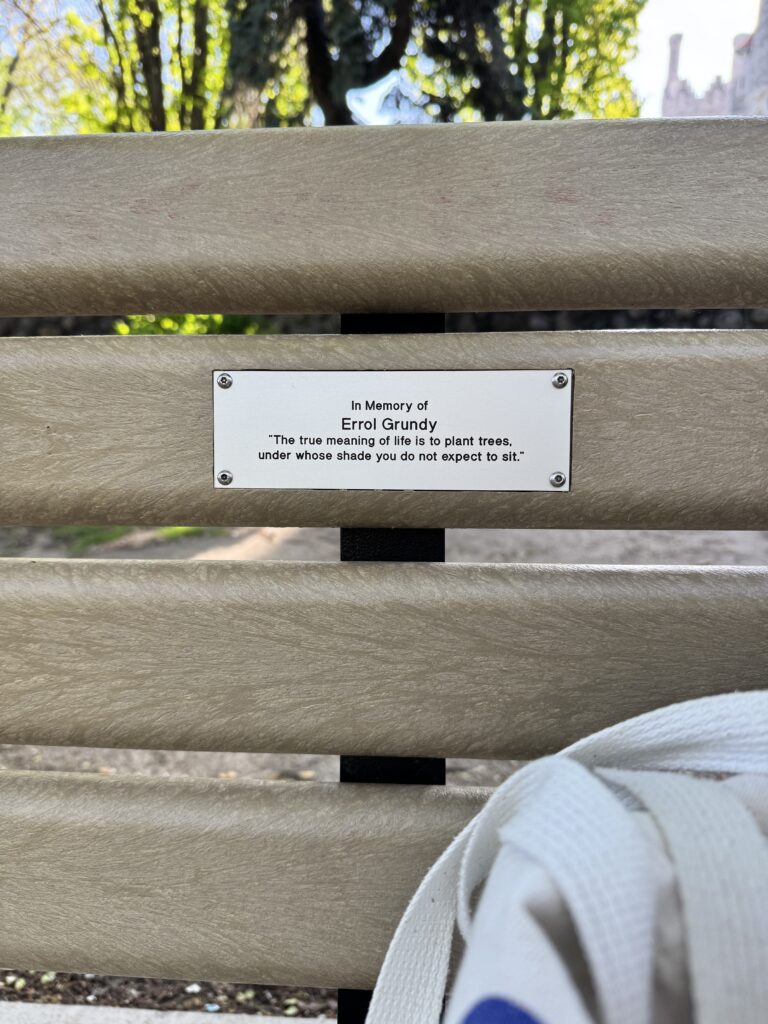
“The true meaning of life is to plant trees, under whose shade you do not expect to sit.”