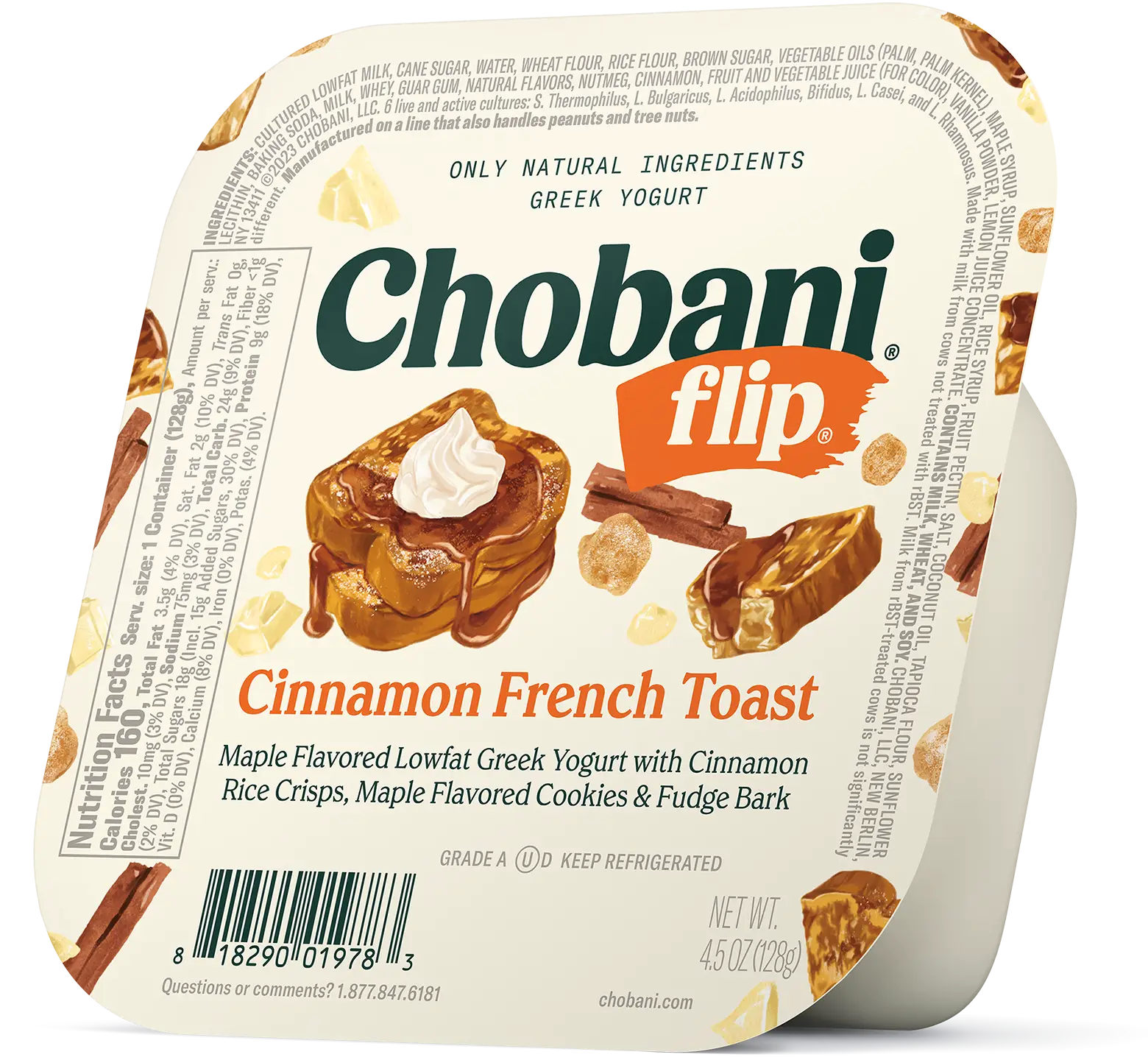
Hi all, I wanted to give my thoughts on the Chobani Flip Cinnamon French Toast flavor. I picked this up at my local Wegmans in Williamsville, New York a month ago.
My Statement on the Wegmans Facial Recognition COntroversy
I do not support Wegmans’ use of facial recognition in their stores and on their app, Wegmans (available on the Apple App Store or Google Play). I do not support targeted pricing efforts through the use of invasive biometric technologies. In the past, I have downloaded the Wegmans app. However, I no longer have any version of the Wegmans app installed onto my phone. I am a Wegmans Shoppers Club Member and have agreed to their terms and conditions, including the collection of my name, phone number, and shopping history associated with this number.
Maple flavored Chobani® Greek Yogurt with cinnamon rice crisps, maple flavored cookies, and fudge bark. Made with only natural ingredients.
Unlike the other new flavor I tried (you can read about Chocolate Haze Craze here), Cinnamon French Toast is surprisingly good! A light mapley yogurt (which they really should just make as a standalone flavor because its SO good) with cinnamony bits is a hoot and a half. If I had one issue with it, it would be that the cinnamon itself is super muted (nonexistent).
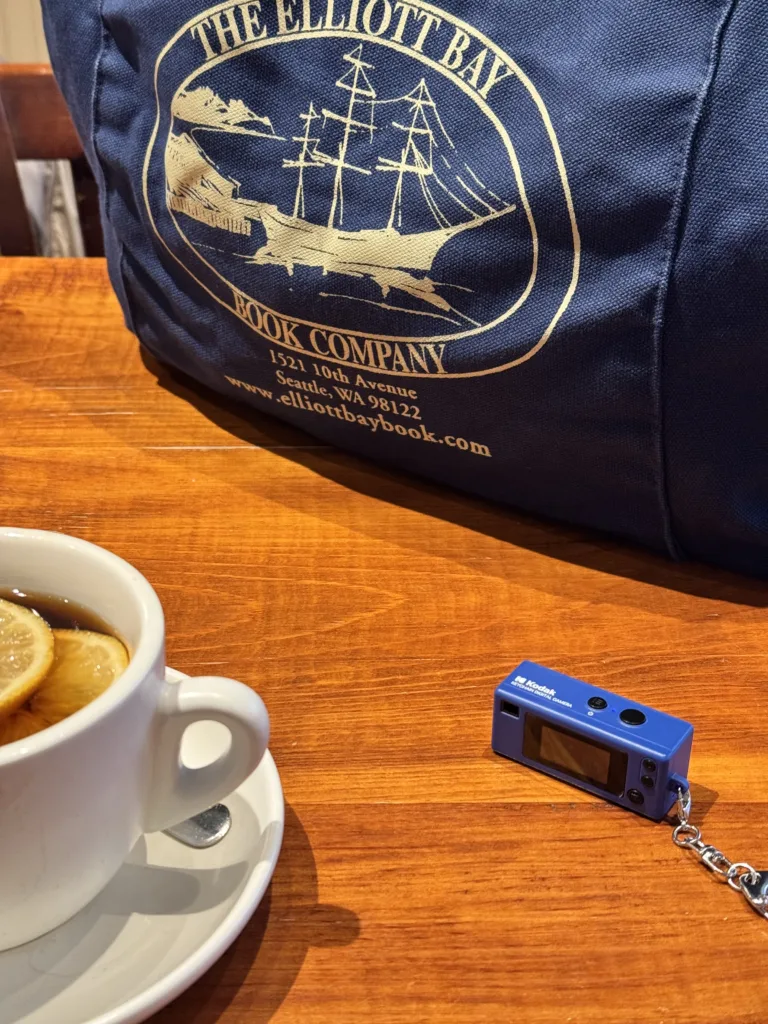
I’ve been trying to get back into casual photography over the past six months. Unfortunately, photography can be a pretty expensive hobby, so I am pretty grateful that I got a Charmera over the holidays to play around with!
What is a Charmera?
A Charmera is a popular keychain camera, which have grown in popularity over the past couple of years. This one is pretty expensive for a 1 megapixel sensor, but it comes in a blind box with six different designs, including one ultra rare design! It’s perfect for consumerists such as myself.
Unfortunately for me, I got this blue one that I don’t mind, but don’t love either. If anyone has a cool one (the yellow or red) and wants to trade, do let me know!
Now that I’ve been seriously using this camera for slightly over a month, here are three things I’ve learned about the camera, and photography in general:
Wow, this camera has no stabilization!
Everything is shaky, especially if you have stress tremors like me. Snap more than one photo because it’s a huge gamble on which photo will not be slightly blurry.
Don’t count on a good sunset
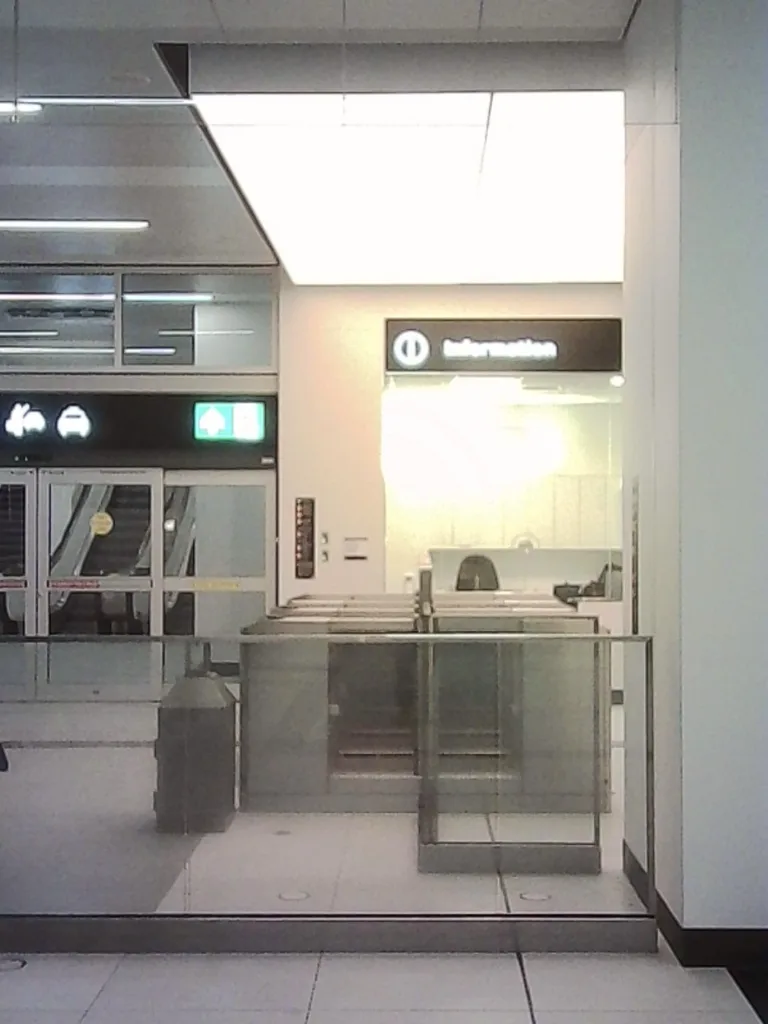
Surprisingly, low-light performance is slightly better than what you’d expect on this camera. What isn’t good however, is any photo taken during dusk. The camera is not good at picking up a large light range and will end up overexposing the entire photo as a result. Shadows still work, but focus on even lighting in your photos.
People are WAY better to shoot than non-animated subjects
For some reason, photos with people really pop out with this camera. I believe it’s because it softens out silhouettes and faces, which really helps with the crappy look of the cameras.
TrTried
Ultimately, I have really enjoyed using the Charmera, despite all of the issues I’ve faced with the formatting with the SD card. The camera works particularly well with street photography and those candid moments that come and ago, and I’ll continue using it for that purpose. Looking forward to exploring photography more and being mindful of the photos I take!
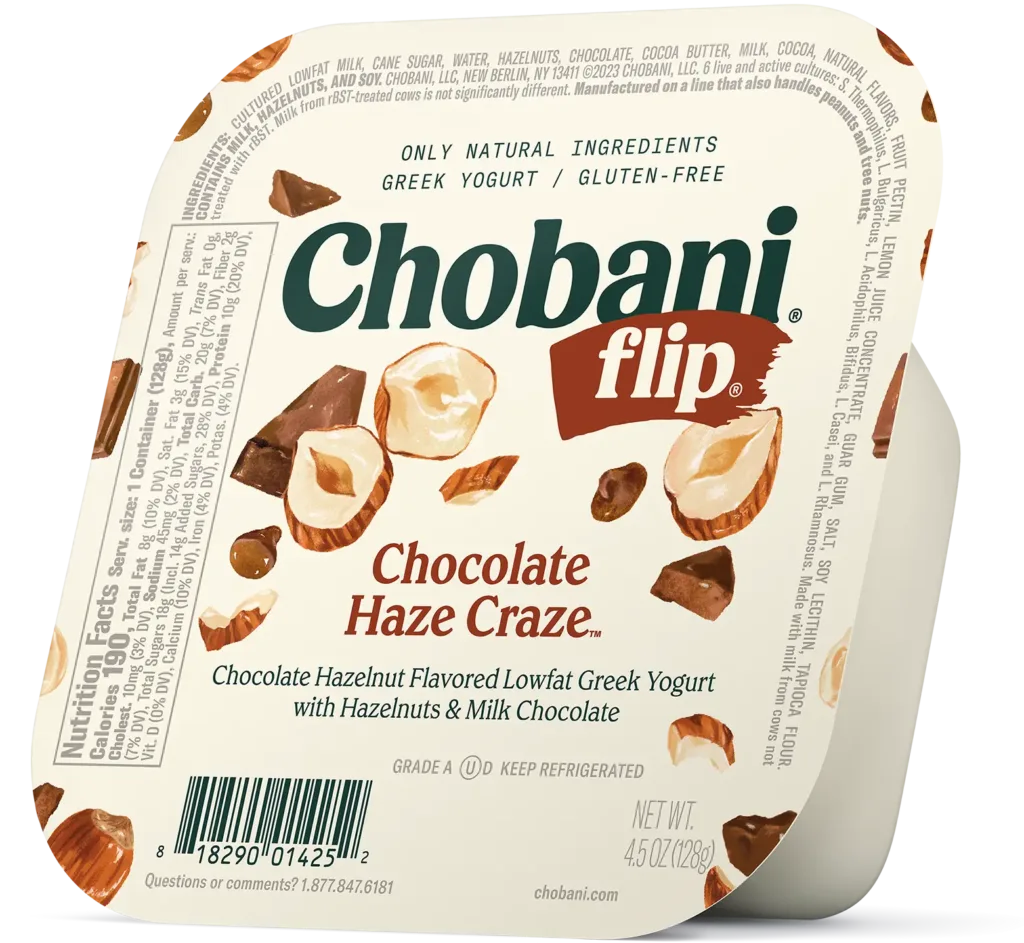
Hi all, I wanted to give my thoughts on the Chobani Flip Chocolate Haze Craze flavor. I recently picked this up at my local Wegmans in Williamsville, New York.
Crunchy hazelnuts and milk chocolate chips tumble in chocolate hazelnut Chobani® Greek Yogurt. Crafted for everyone from only natural ingredients.
This is kind of gross. The chocolate hazelnut Greek yogurt continue to disgust me (see Peanut Butter Cup). It’s like a really mildly flavorless paste of sorts, colored brown in a way that really makes you think about the food you put in your body. The hazelnuts were a bit stale and cold, because I put them in the refrigerator.
The most offensive part of the hazelnuts however, was the fact that it was flavorless. Just a moist, crunchy texture in your yogurt. The milk chocolate chips were fine, nothing offensive.
3/10. One point over the Peanut Butter Cup because the yogurt is barely less offensive.
The least interesting people I know are apathetic.
People need to start sharing more of their opinions! I don’t really understand why in the era of TikTok, where we’re given a microphone to voice our concerns to people that those voices become very low. I’m not saying you need to go as drastic as sharing all of your thoughts on TikTok, but very few people feel even curious enough to learn about things they don’t even know about.
The way we (society) is choosing to outsource what we’re curious about to an algorithm is frankly very concerning and indicative of our convenience culture. I implore people to take a 20 minute (1 mile) walk around their neighborhood, with just a notepad and a pen. Write down anything that interests you as you walk around and do some research when you get home. Frankly, I want life to be more curious and my hope is that others are curious too.
The BUffalo Pothole Bandit
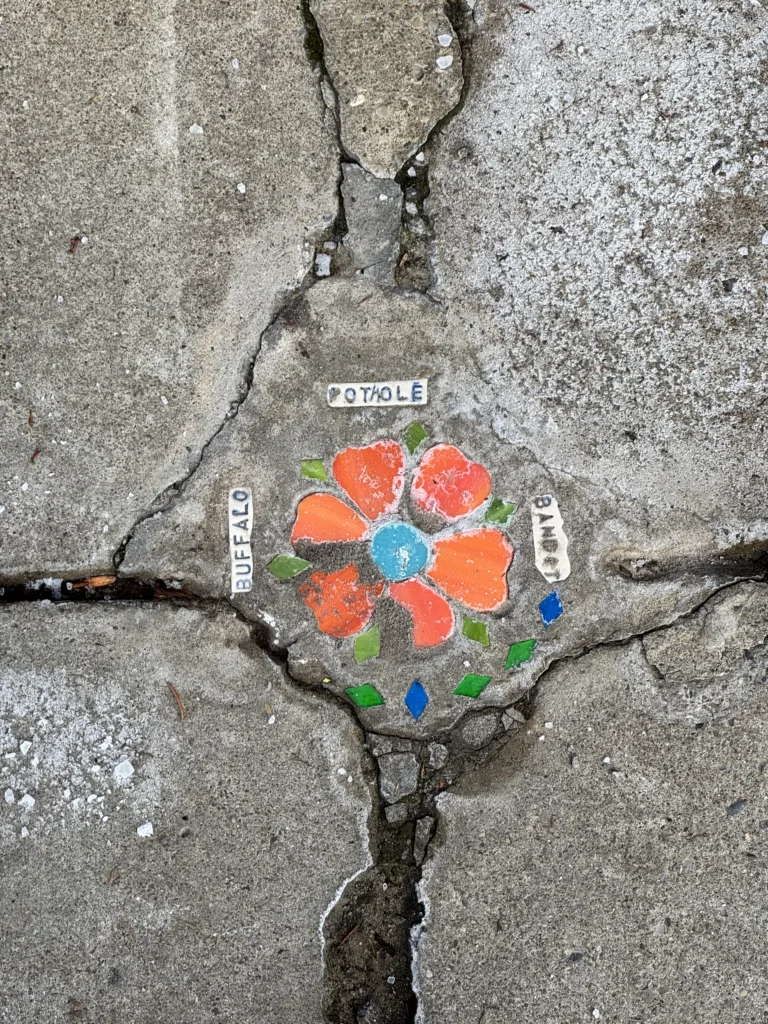
This was something I took a photo of because I was curious about it! I stumbled upon it during my stroll on Elmwood.
The story of the Buffalo Pothole Bandit started during the pandemic. A man who was enraged with the Supreme Court’s decision to overturn Roe v. Wade (1973) filled a bunch of potholes around Buffalo’s Elmwood Village neighborhood with “F**K SCOTUS” messages. There’s also another story where he just twists his ankle and gets enraged enough to fill it with cement and art.
What really interests me about this character is his whimsy and his ability to use something as simple as basic wear and tear as an opportunity to make the city a more beautiful place. This is an example of someone who shares his passion with the world, and the world becomes a better place because of it. I’m not a artistic person but I would love to contribute something similar to my community!
I’m excited to announce that 2026 is officially Martin’s Year of Creation! The Year of Creation is a year-long ethos to embrace the systems of creation, and see how creating, and not consuming changes the perspectives in your life.
Presented by Founding Partner CreativeSystems of America, the Year of Creation will focus on three key themes that I will bring to myself and others throughout the whole year of 2026.
Create Connection
As its name suggests, Create Connection focuses on creating connections and communities within the spaces that I am present in. Connection is a reflection of who we are, who we care about, and what we can ultimately be. This year, we create connection by opening ourselves to the different portals of our identity – sharing knowledge, ideas, and strong emotions with loved ones, and strangers.
Creating connection revolves around building the opportunity to interlink with others through open portals. We must ask ourselves: where can I be more mindful of opportunities to be more present with people in our lives? This may take form in written text, in-person gatherings, or a simple sought of solace of the vocalization of our problems. However this may present, it is an invitation of cognizance of life’s many small moments; ones that may present opportunities to listen and share.
Create Spirit
Create Spirit revolves around the ideal of an omnipresent idea that arises from our physical being. Many of us, myself included collect and curate objects that become a part of our mental and physical being. Creating spirit focuses on arising those thoughts outside of the object itself, where we build on the emotions and thoughts that come from the object and isolate it from physicality. The goal with this theme is to remove our attachments to the physical, and create a spirit using the emotions that we bring with us from the physical world into our mental sphere. In the end, our inner thoughts decompose with our physical thoughts, but the objects themselves stay stagnant – a reflection on how holding onto the past hurts the present you, evolving with life.
Self-expression is a powerful thing, and when we create spirit, we begin to move beyond our physical attachment to objects, and towards creating an attachment to what those objects represent. We can begin to let go of the physical and enter the mental, securing our creative identity without the need for the physical.
Create Myself
Finally, we must embody the creation of oneself during the year of creation. While we may never erase the past, we gain an opportunity to look beyond and see how our inner self becomes one with our outer self.
“Do we really create identity?” you may be asking. The motive is not to force the creation of oneself. Instead, you should be seeking out ways to create opportunities and safe spaces for our real identities to exist.
We take the moment this year to see what we really want to do with our limited lives. This is the year to rid oneself of the parasocial reflection highlighted through our social media accounts. Instead of following defined paths, we take the opportunity to see where new footsteps can lead towards. This is the year we omit goals in favor of direction.
What does this look like? We omit the consumption of what’s popular, and seek new explorations of what can be popular in our identities. We rid oneself of the pleasures of “what do you want?” and embrace standing up to what feels right in that moment. Rumination and self-reflection is pushed to ensure our movements align with our value. This is the pivotal moment to define how our value reflects upon ourselves.
Official Logo
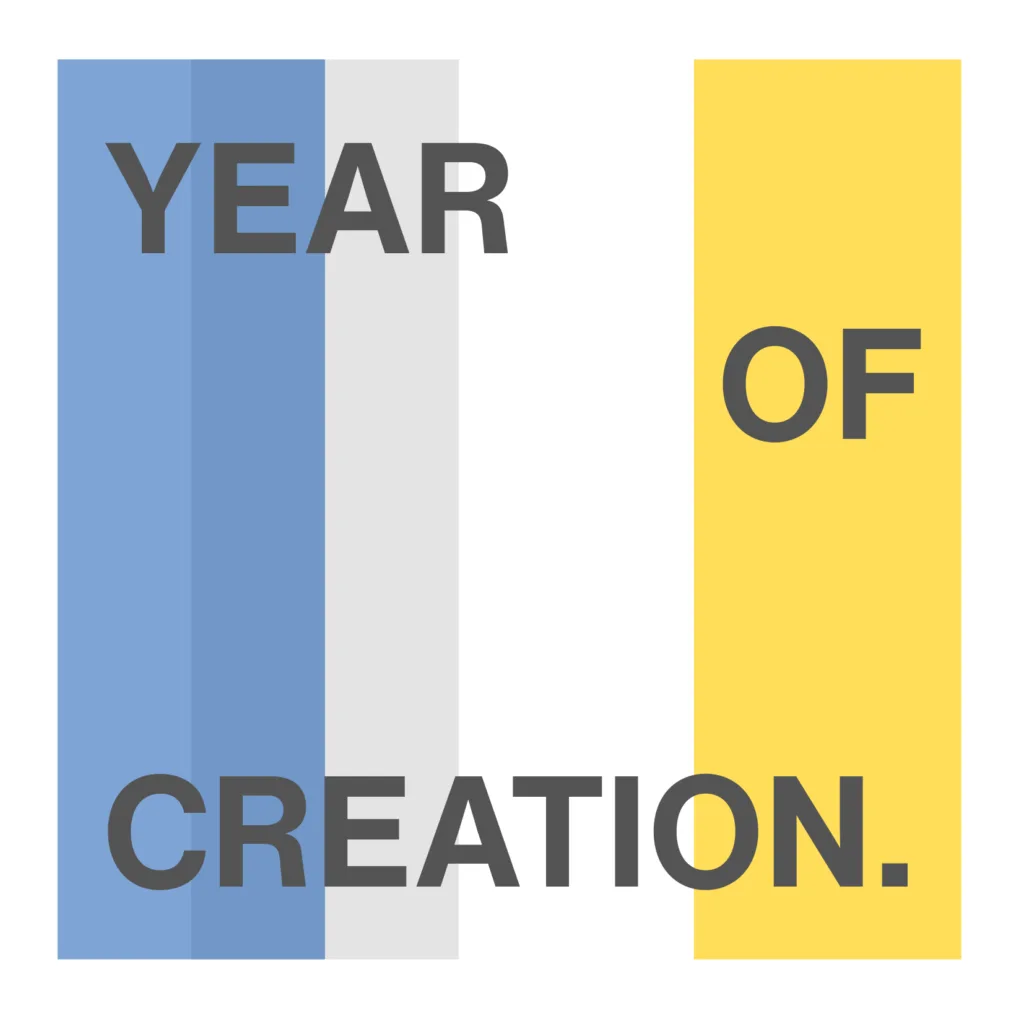
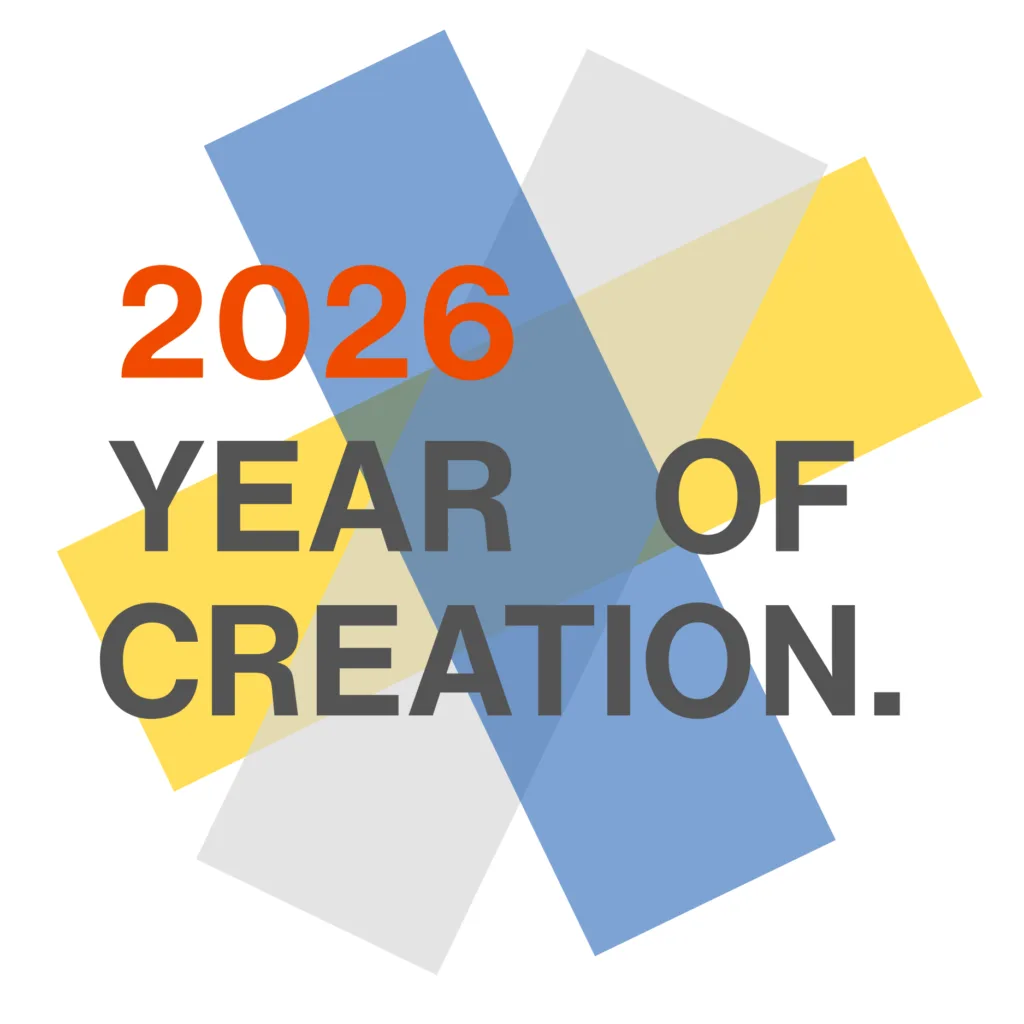
To celebrate the Year of Creation, I have created a special logo to represent the theme. Although simple, the logo is a cumulation of creative enterprises emerging together to provide a graphical representation of the identity of the year.
The logo is comprised of three separate hard blocks stacked on top of each other, each representing a creative theme for the year. Gray is a neutral palette for new colors in life – a Connection for Creation. Blue is for our liberty – the Spirit to Create. Finally, Yellow, at the bottom, represents the backbone for creation – the mind of oneself. Each block is arranged at various angles related to 26, symbolizing the year 2026. Stacking each block provides context for each theme’s strong identity, but the immersion of all in the center provides a reprieve of loneliness – each block strengthens one another. The text, composed of uppercase Helvetica blocks, provides a clear backdrop for the year’s blessings; a clear path forward for creation.
Special thanks to our partners at CreativeSystems of America for the inspiration and logo copyrighting.